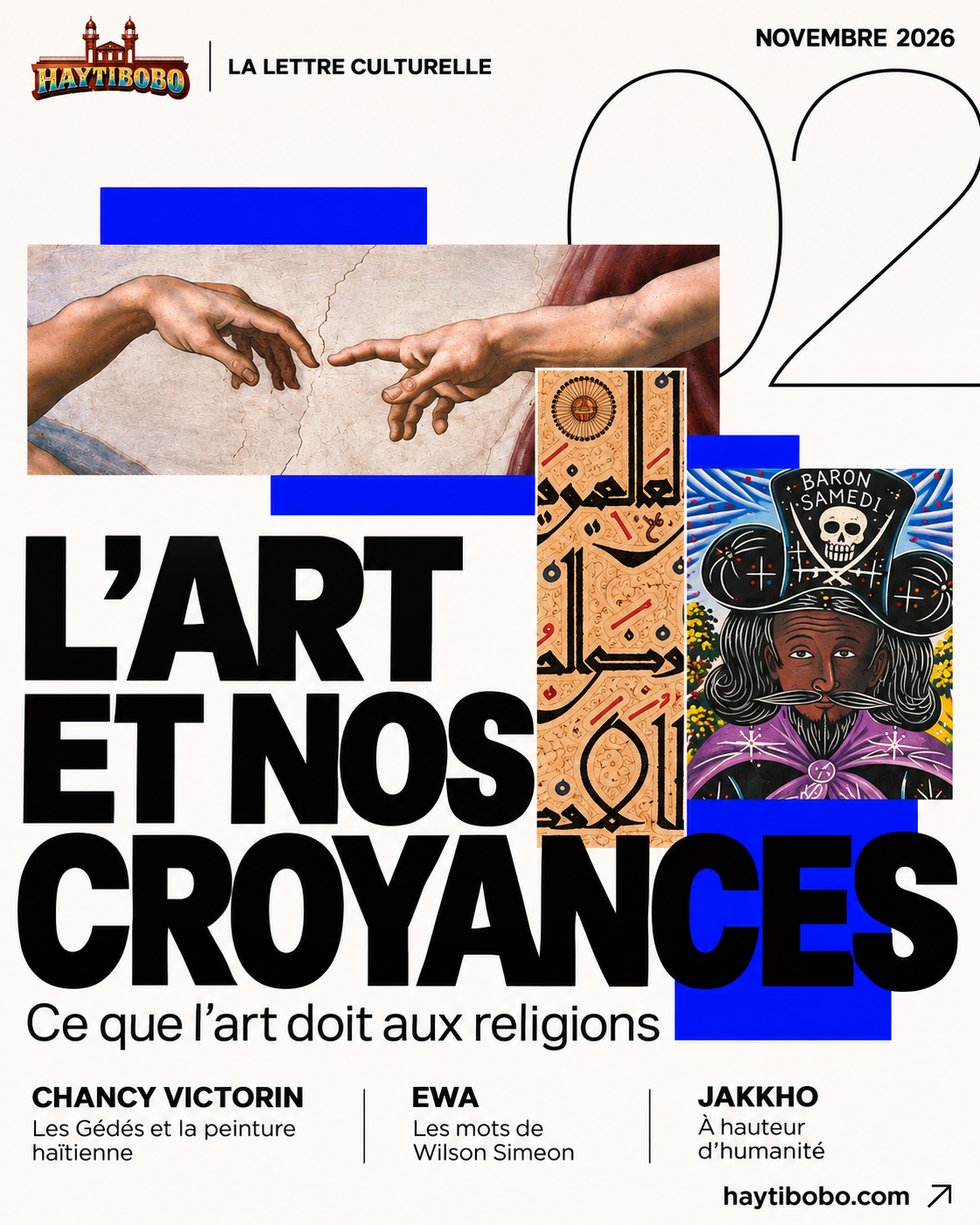
Art and
our beliefs.
What religions have inspired in artists, the Gédés in Haitian painting, and Jakkho’s humanist eye.
What art owes to our beliefs
Sometimes, simply stepping into a church is enough to understand that part of art history was written there. On walls, in stained glass, above altars, artists gave a face to what the faithful could not see. They painted sorrow, hope, the fear of death, and the promise of another life. These questions still touch us, even when we no longer share the faith that inspired the works.
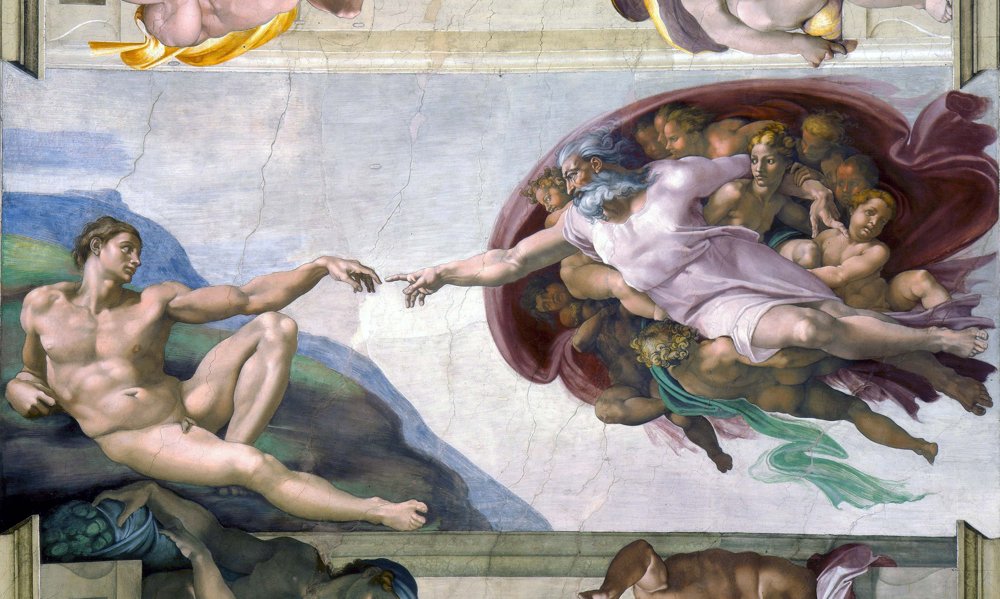
Michelangelo · The Creation of Adam
Sistine Chapel · detail. Smarthistory.
For centuries, the Catholic Church commissioned paintings, supported workshops, and gave artists spaces in which to develop their talents. It is hard to imagine Michelangelo without the Sistine Chapel ceiling, or to separate much of Renaissance painting from biblical stories. That support also came with demands: artists could not always paint what they wanted, or as they wanted. Religion encouraged creativity while seeking to control its meaning.
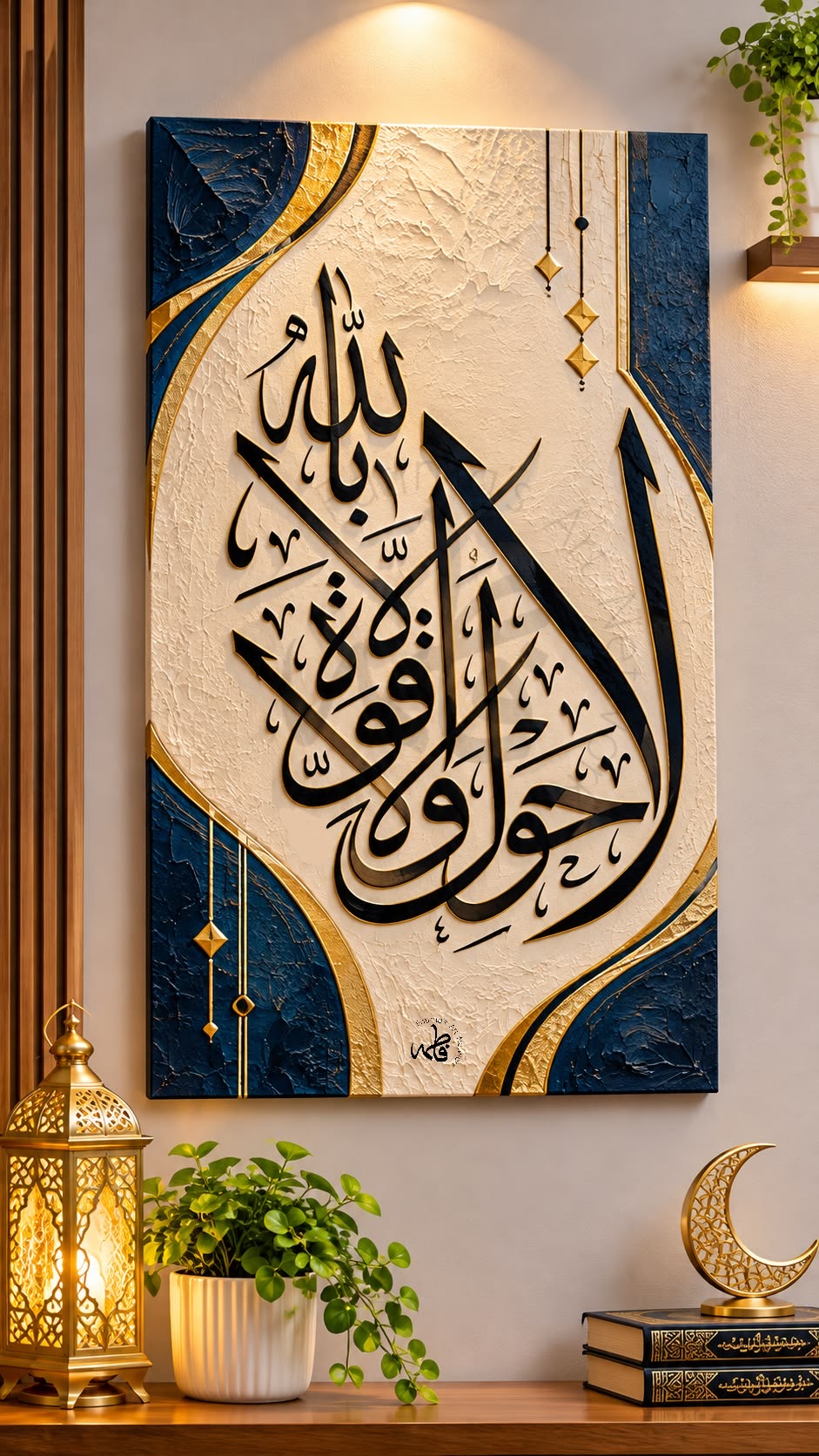
Supplied photographs
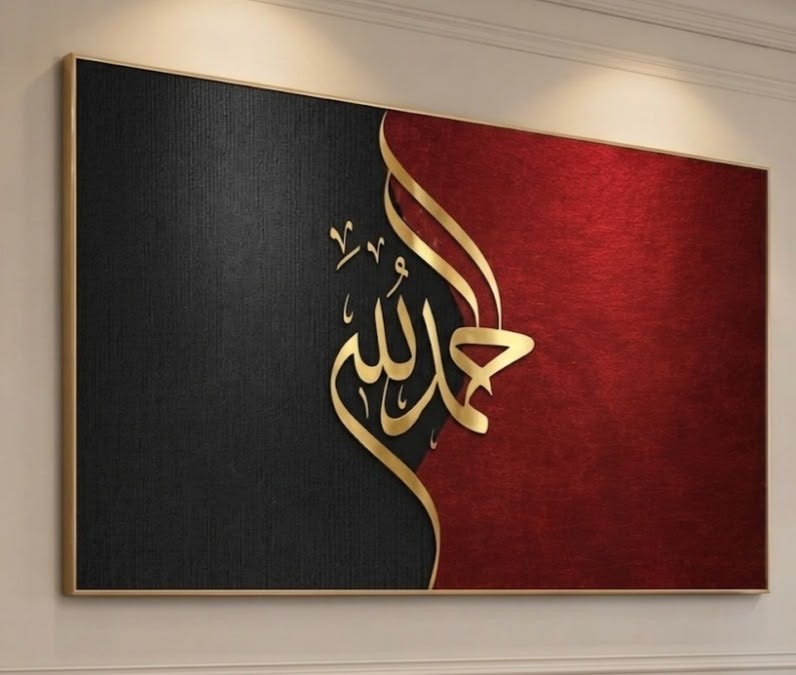
Other traditions opened other paths. In the arts of Islam, the importance of the sacred word nurtured an extraordinary practice of calligraphy. Writing became a visual presence, carried by the rhythm of the line. Geometric patterns and plant motifs also offered remarkable creative possibilities. Yet it would be wrong to define these arts by the absence of human figures: Persian manuscript paintings, in particular, attest to a rich figurative tradition. Attitudes toward images varied widely across periods, regions, and uses.
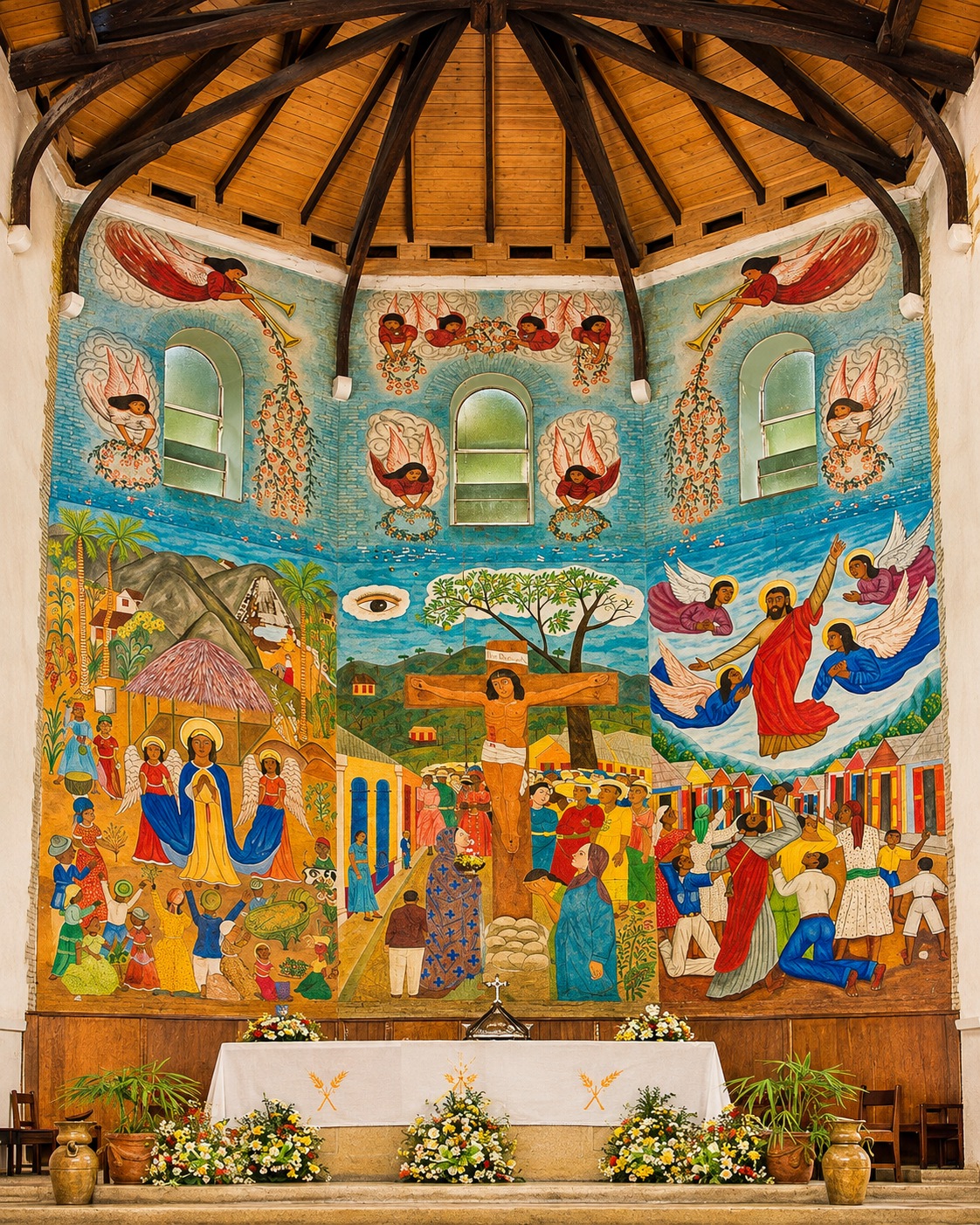
Sainte-Trinité murals
Edited photograph
Protestantism also changed the place of art. In some branches of the Reformation, religious images were removed from places of worship, sometimes destroyed. Others, such as the Lutheran tradition, retained a place for them. In the seventeenth-century Netherlands, portraits, landscapes, interiors, and still lifes flourished, supported by new buyers as well. A set table, a room lit by a window, an ordinary face could become a painting’s subject. Everyday life, too, deserved to be seen.
And what about us?
We cannot acknowledge Catholicism’s role in European painting, admire the arts of Islam, and then look away when Vodou enters a Haitian canvas. That would mean approaching our own history with a discomfort we do not impose on anyone else’s.
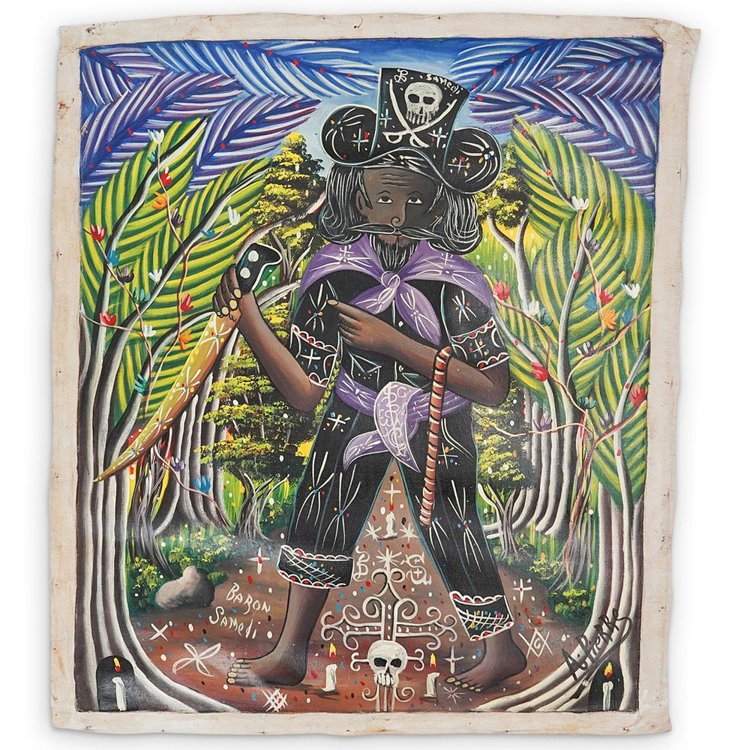
André Pierre · Baron Samedi
Akiba Antiques / Bidsquare.
In this issue, Chancy Victorin invites us to consider the place of the Gédés in Haitian painting. Their clothing, their gestures, their way of bringing death and life together give painters a distinctive subject. Behind these figures lie beliefs, but also memory, attitudes, and a way of inhabiting the world.
We do not need to share an artist’s religion to take their work seriously. We can pause before a Virgin Mary, a piece of calligraphy, or a Baron Samedi and try to understand what that creation tells us about the people who brought it into being.
This is also the role we want HAYTIBOBO to play: a space to look before judging, to discover before rejecting. Our heritage deserves that attention, especially in its most intimate, complex, and sometimes unsettling aspects.

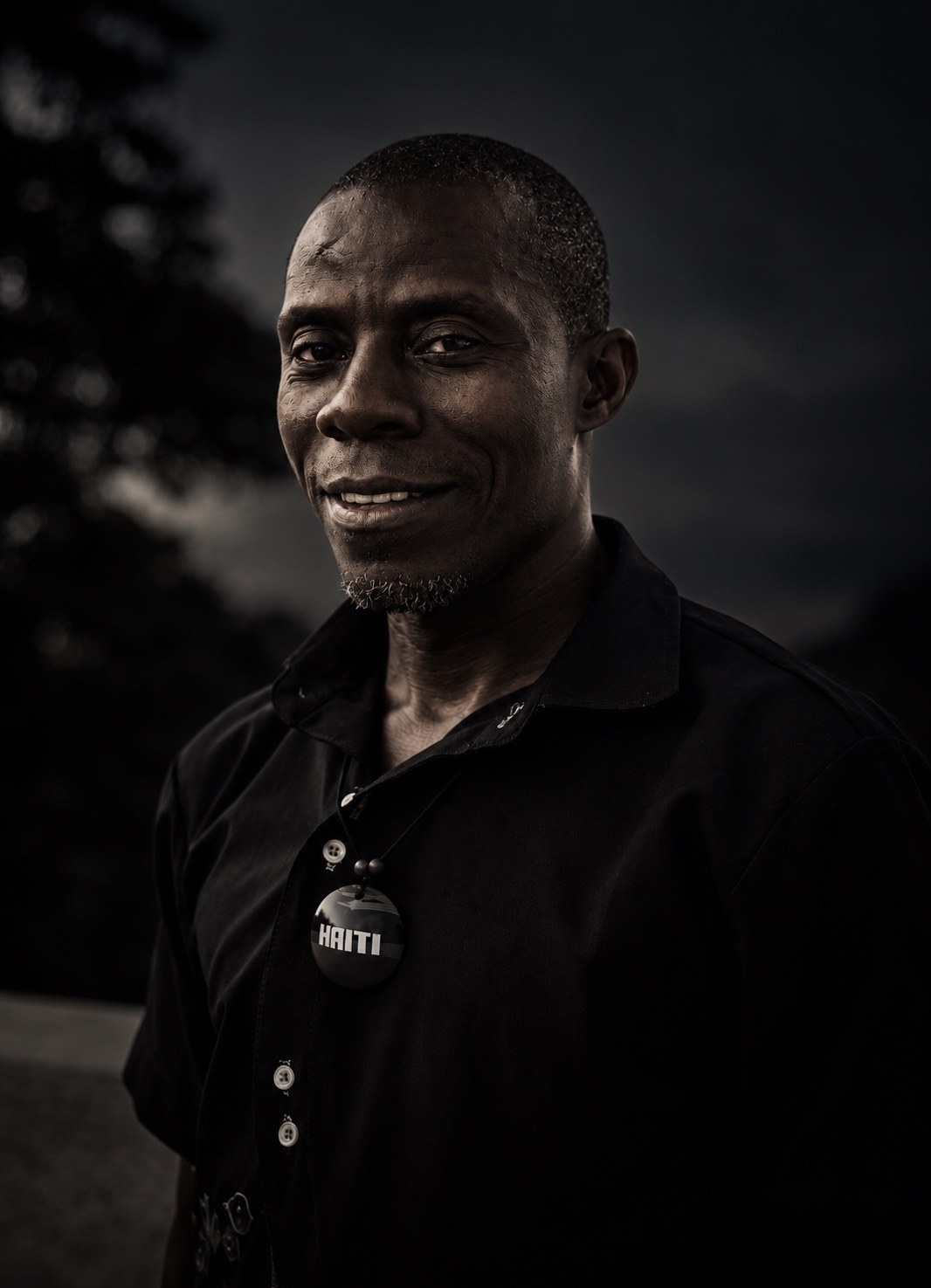 | Wilson Simeon (EWA)A place for poetry. |

Wilson Simeon · EWA

The Gédés, leading muses of Haitian painting

They may be the most fascinating spirits in Vodou: the Gédés. Their annual veneration begins in mid-October and lasts until December 6, with its high point on November 1 and 2. Haitian painting, it bears recalling, is strongly influenced by Vodou, whether or not the artist belongs to the Saint-Soleil movement or the school of beauty. At least, that is what this brief survey of Haitian painters reveals. It is not exhaustive, but it shows how these deities, whose worship is associated with bawdy humor, both repel and fascinate.
André Pierre painted no fewer than two works on this theme. His 1982 painting evokes Baron Samedi, bringing together costume and joviality.
In 2003, Gérard Fortuné produced a naïve painting depicting a ceremony honoring the Gédés. Erick-Paul Hector created a work devoted to Baron Samedi, held at the Chazen Museum. The two top-hatted men in a painting by Gérard Valcin belong to this aesthetic. Even Basquiat, who had Haitian roots, drew figures associated with Baron Samedi on several canvases.
For many Haitian painters, including Hector Hyppolite, there is no doubt that genius tends to merge with religious fervor. Yet the place the Gédés occupy in the arts also comes from their picturesque visual attributes: hats, glasses, face powder, and swaying hips make them a more readily usable subject than other Vodou spirits.

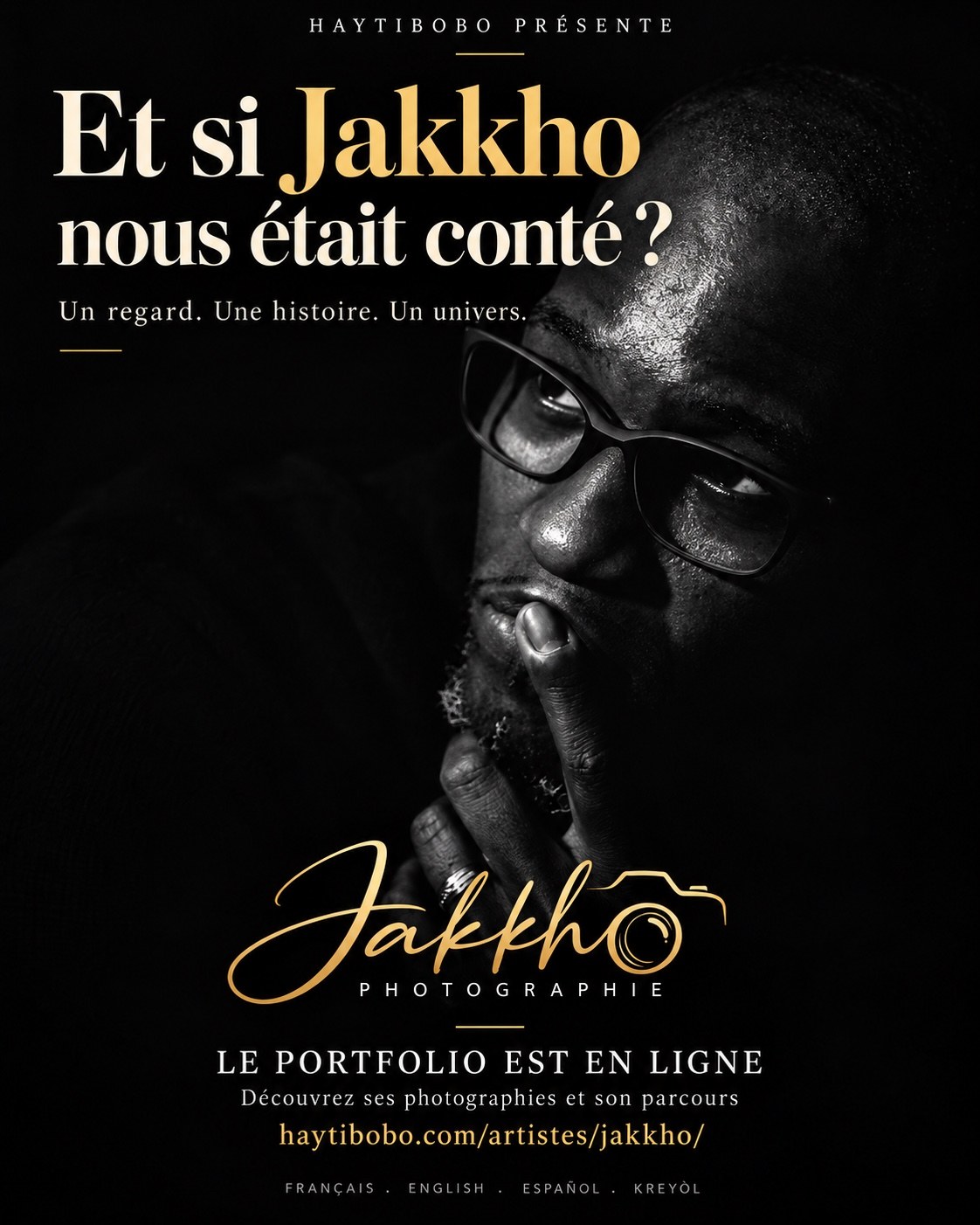 | JakkhoHumanist photographer At the heart |
Jakkho, at the heart of humanity
Two smiles around a water pump. That is all it takes to hold our gaze.
Jean Jacob Charles, known as Jakkho, describes himself as a humanist photographer and an explorer of humanity. His first camera, received at twenty, opened a path he has followed for twelve years: looking beyond appearances for what people feel and what connects them.
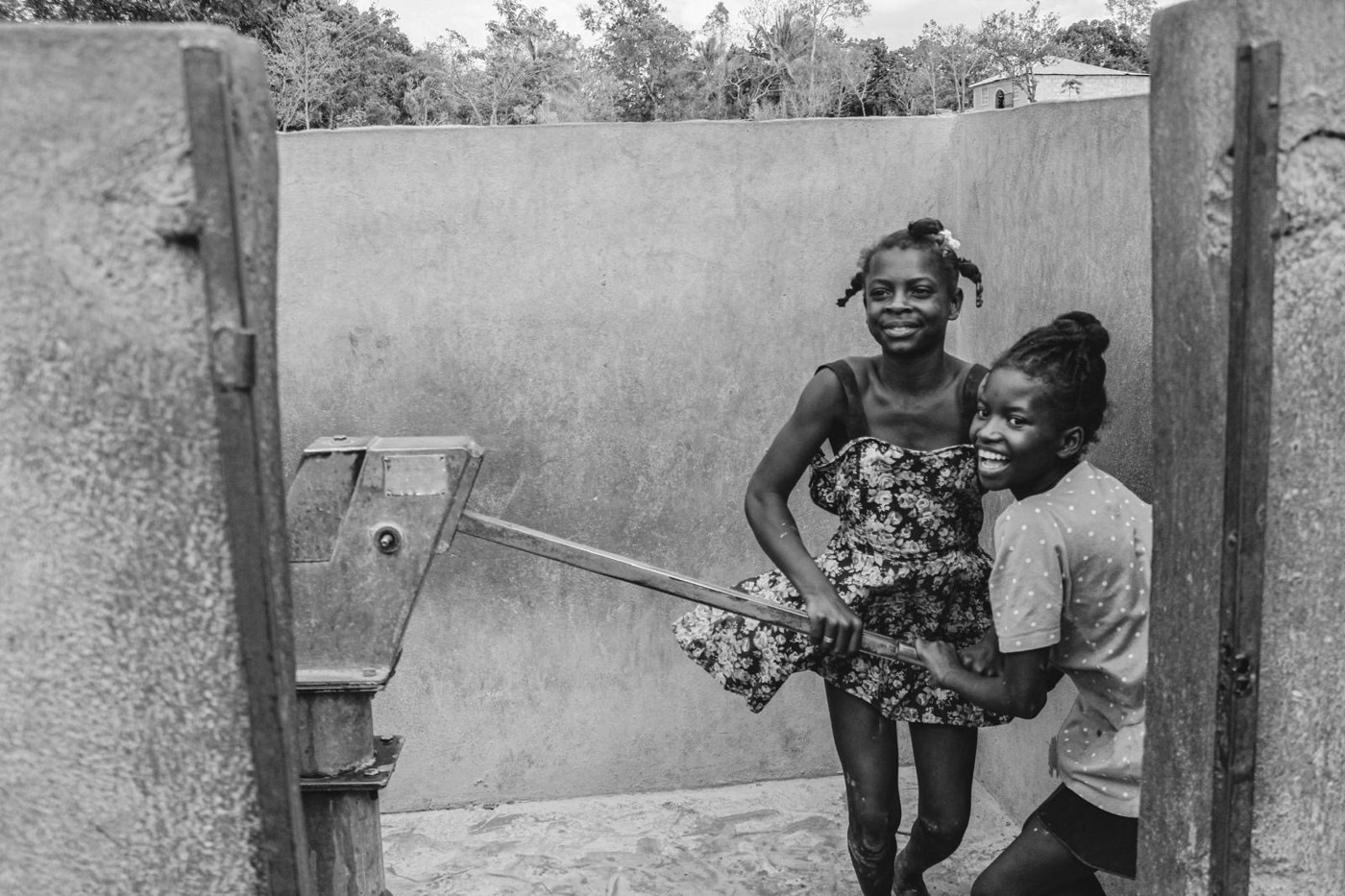
“The one who captures what people feel”: the phrase finds a particular echo in this photograph.
Two young girls hold a pump handle. One looks slightly to the side; the other turns toward the lens, her face lit by a broad smile. We do not know what has just been said, or what amuses them. The image lets us enter the moment without claiming to explain everything.
The composition deserves a closer look. Two pillars frame the scene like an open doorway. From the pump on the left, the diagonal handle leads our eye to the hands, then the faces. The large, almost bare wall leaves a quiet space around the figures. Flowers on a dress, polka dots on a blouse, and the textures of concrete give this simplicity its richness.
Black and white brings these elements together without blurring their differences. It draws out expressions, light on faces, and the presence of bodies. The smile of the girl in the foreground anchors the photograph; we return to it after exploring the rest of the frame.
The image’s strength also lies in its restraint. The pump and walls could become an excuse for commentary on material conditions. Here, the people fully inhabit the scene. Their joy needs neither explanation nor transformation into a lesson: it exists, and the photographer gives it its full importance.
In this attention, we recognize an essential quality of Jakkho’s work: knowing how to compose an image while allowing the people he photographs to remain themselves. His eye gives value to an everyday gesture, a fleeting expression, an encounter we might have passed without noticing.
This photograph stays with us for a simple reason: after looking at its composition, what we remember most are those two smiles.
Critical perspective: the HAYTIBOBO editorial team
Explore Jakkho’s portfolio ↗
Art moves forward together.
HAYTIBOBO thanks Pikimen, La Crêtonne Hôtel, Idgie’s, and D&H Luxury for their support.